Medical-necessity denials look like a billing problem. They usually start at scheduling. The evidence was in the chart, or could have been, but nobody checked it against the payer's criteria before the date of service. By the time billing sees the denial, the fix is an appeal instead of a quick call to the clinic.
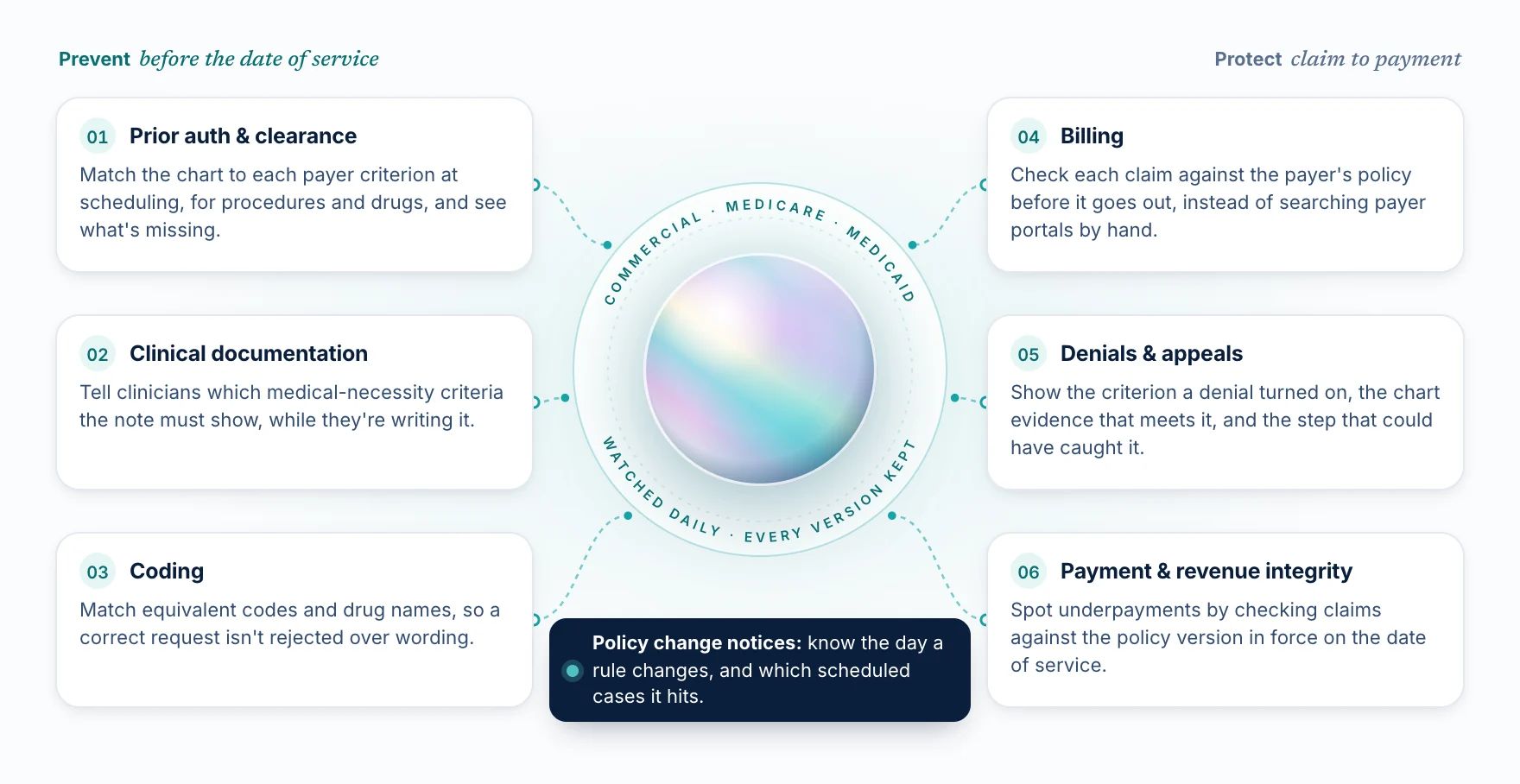
That's why "we need help with payer policy" is hard to pin down. Payer policy touches almost every team in the revenue cycle, and each one needs something different from it. Here's where it fits, in the order a case moves through.
Prevent: before the date of service
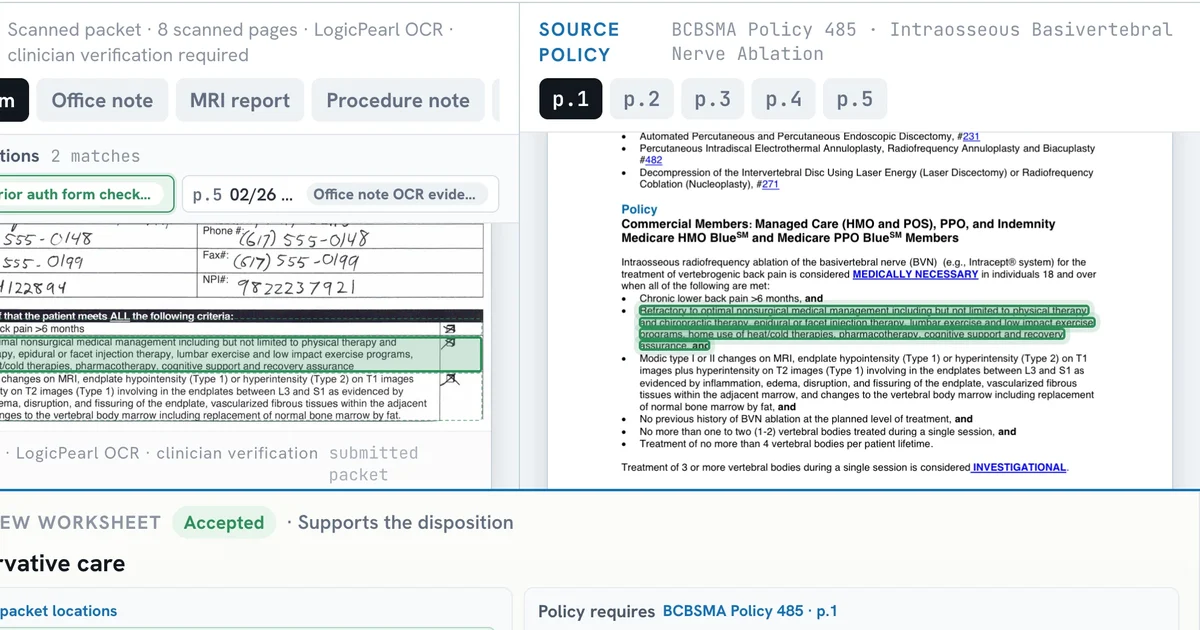
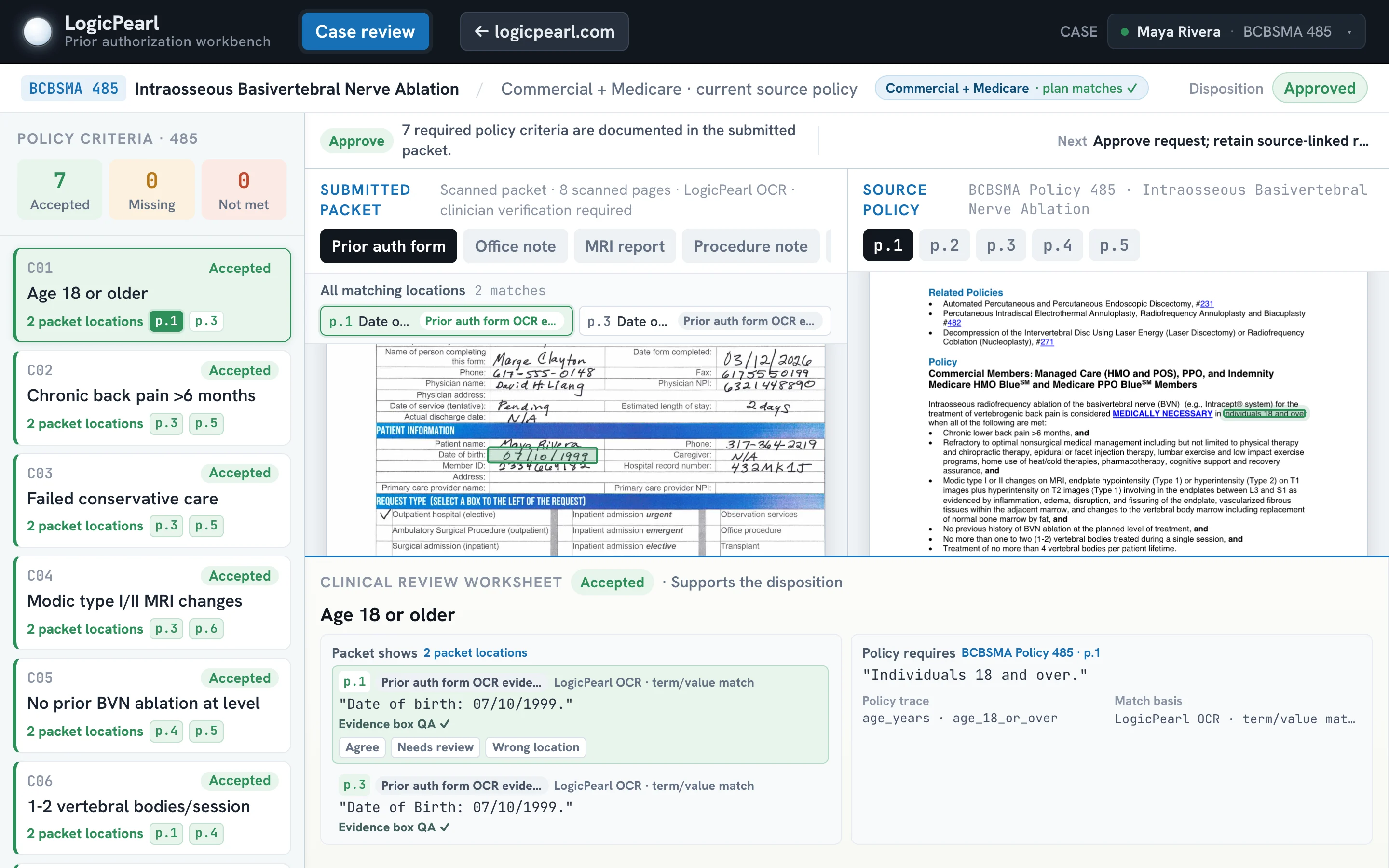
Prior authorization and financial clearance. This is the earliest and cheapest place to catch a problem. When a procedure or drug is scheduled, check the chart against each of the payer's clinical criteria and see what's missing while there's still time to fix it. Today this often means staff searching payer portals, calling, and faxing, and relying on a few people who know each payer's quirks.
Clinical documentation. Many medical-necessity denials aren't about whether the patient qualified. They're about whether the chart said so in the way the payer's policy requires. Telling clinicians which criteria the note needs to show, while they're writing it, prevents denials that no amount of back-end work can.
Coding. A correct request can be rejected over wording: the policy names one drug and the order uses another name for it, or an equivalent code. Recognizing equivalent codes and drug names keeps good requests from failing on a technicality.
Protect: from claim to payment
Billing. Check each claim against the payer's policy before it goes out, instead of searching payer portals by hand.
Denials and appeals. When a denial arrives, show the criterion it turned on, the chart evidence that meets it, and the step that could have caught it. That last part matters most: every denial should teach the earlier steps something.
Payment and revenue integrity. Spot underpayments and incorrect denials by checking claims against the policy version that was in force on the date of service, not the version on the payer's site today.
Underneath all of it: policy changes
Payers revise medical policies constantly. Every change is another rule someone has to learn, and it lands on every team above at once. A useful tool watches the payers' published policies, keeps every version, and tells you the day a rule changes which scheduled cases it affects.
This gets harder as a health system grows. New clinics, new payers, and new staff each add payer rules to learn, and today that knowledge usually lives in a few experts' heads.
What this means for a health system
A standalone RCM vendor mostly sees denials after the fact. A health system owns the whole cycle, so it can do something better: prevent the denial instead of winning the appeal. The measure of success shifts from "how many appeals did we win" to "how many denials never happened."
If you're scoping a project, a practical way to start:
- Pick the policy family that causes your team the most trouble.
- Replay a sample of recent denials in it: which were preventable, at which step, and what was missing.
- Use that readout to decide where to plug in first.
Evaluating vendors for this? Here are five questions to ask before you trust software with your denials, and a plain-English glossary of the terms you'll hear. To see what chart-to-criteria matching looks like, open the prior-auth demo, which runs on synthetic patients and published payer policy.